India intensifies its fight against e-commerce with a new $200 million case targeting Walmart’s fashion arm, Myntra
Contents4
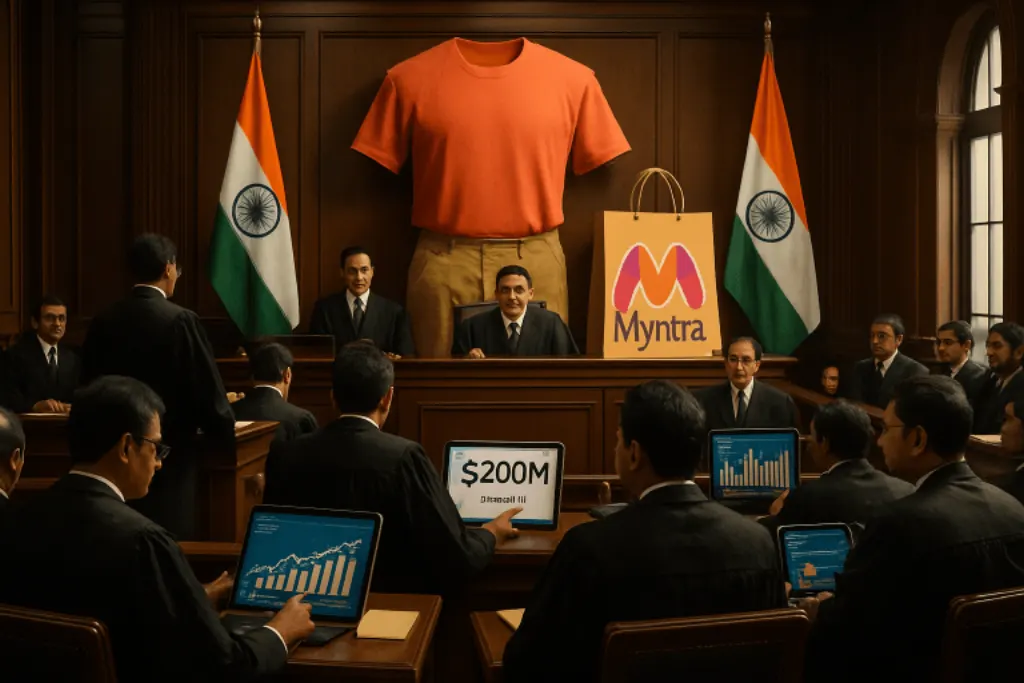
Amid a series of stringent regulatory measures, India is intensifying its efforts to regulate the thriving e-commerce sector. Walmart-backed online fashion giant Myntra is now at the center of a new $200 million lawsuit, specifically targeting its operations. Accusations of circumventing foreign investment laws, political battles interfering with trade laws, all converge on a major issue: the future of e-commerce in India.
Legal Context: Foreign Rules of E-Commerce
India’s legal structure regarding e-commerce is complex and subject to numerous interpretations. One of the key pieces of legislation governing this sector is the Foreign Exchange Management Act (FEMA). This imposes restrictions on foreign companies seeking to operate in the Indian market. For example, it explicitly prohibits companies engaged in wholesale from selling directly to consumers, which is strictly reserved for local players. Under this legislation, Myntra is accused of circumventing these rules through a related entity, Vector E-Commerce, by branding its retail operations as a wholesale business. This maneuver allegedly allowed Myntra to illegally participate in the retail market, channeling over $191 million through this intermediary. This directly violates the provisions of FEMA, which limits sales to affiliated group companies to 25%. **The Enforcement Directorate, the agency responsible for applying these laws, has filed a complaint against Myntra. This move is part of a concerted effort to discipline international e-commerce giants in India, as they often find themselves under scrutiny for other practices of legislative circumvention or potential fraud, as demonstrated by the previous cases of Amazon and Flipkart.**Learn how India is strengthening its e-commerce regulation with a $200 million lawsuit against Myntra, Walmart’s fashion platform. This case emerges as the country seeks to better regulate the practices of e-commerce giants and protect its local market.
Indian authorities are seeking to preserve and protect local commerce, but also to prevent the overwhelming dominance of large foreign groups in their market. Thus, maintaining a balance between regulatory control and openness to foreign investment remains a delicate exercise. Indeed, the issues at stake in this case and the related laws go beyond mere commercial considerations. They also concern broader diplomatic relations, particularly with the United States. Law/DirectivePurpose Impact on Foreign TradeFEMA
Exchange ManagementRestricting Retail Sales by Foreign Companies FDI Regulation Foreign Direct InvestmentLimiting Investment in E-Commerce

Regulation of E-Commerce Platforms
Myntra’s expansion plans are not limited to fashion alone, but also venture into the dynamic sectors of quick-commerce, beauty, and home living. By seeking to diversify its operations, Myntra aims for sustainable growth, while integrating collaborations with influencers and celebrities like Amazon and YouTube.
For Walmart, owner of Flipkart, implementing new strategies is crucial to solidifying its position in the Indian e-commerce market. Despite the challenges, Walmart is committed to further investing in India, to the tune of $2.5 billion, to expand its operational and regulatory capabilities. This represents a bold move in the Indian market.Implications for Local Players and Their Competitive Strategies Faced with this international competition, local companies such as Ajio, Snapdeal, Zivame, and Limeroad must adapt their strategies to remain competitive. One of the key areas for development remains improving the user experience with advanced technologies and personalized offers. Ajio, for example, has intensified its partnerships with local designers and expanded its product portfolio to include luxury brands, while offering special discounts to retain customers. For its part, Snapdealfocuses on SMEs and micro-entrepreneurs to expand its range of local products while promoting Indian craftsmanship. https://twitter.com/LesEchos/status/1761685013894930818 With the rise of international platforms, social selling has gained importance.
Zivame, a leader in women’s lingerie, relies on influencer-organized events to boost its online sales. While
Limeroad
focuses on curating ethical products based on sustainability, craftsmanship, or recycling criteria.
Established companies are also striving to improve their delivery services, including express delivery, a feature that is becoming essential to attract busy urban consumers. This requires local businesses to demonstrate continuous innovation to stand out from powerful competitors like
Flipkart
or Amazon . Company Strategy
Benefits

Local Partnerships Improved Product RangeSnapdeal Focus on SMEs Strengthening Local Products ZivameSocial Underbelly Increased Visibility A Changing Future for Indian E-Commerce
In 2025, India continues to strengthen its legislation to curb commercial practices deemed deceptive. This is not limited to foreign companies, but also extends to local players who must comply with ever-stricter transparency and consumer protection standards. This dynamic could well reshape the country’s commercial landscape.
The e-commerce sector is undeniably booming, and despite regulatory challenges, it offers enormous opportunities for both established and emerging players. With a young and tech-savvy population, India remains a fertile market for digital commerce innovations. Navigating this complex landscape requires companies to be not only responsive and adaptable, but also visionary in their strategic approaches. Those that effectively address regulatory requirements while cultivating innovation, such as the adoption of AI to personalize the customer experience, will have the ability to thrive.
Discover how India is strengthening its e-commerce regulations with a new $200 million deal targeting Walmart’s fashion platform, Myntra. This decision marks a turning point in the regulation of the sector and highlights the challenges facing e-commerce players in India. Global interconnectedness, coupled with local challenges, is forcing companies to rethink their strategies to remain relevant. The challenge for the sector is to maintain a balance between economic dynamism and compliance with legal frameworks, both national and international.

Read next
 E-commerce news
Shein in the sights of European authorities: investigation into compliance with consumer laws in the fight against e-commerce
Shein, the Chinese fast fashion giant, is currently under the spotlight of European authorities. The heart of the debate
 E-commerce news
A fight against tariff exemptions impacts US e-commerce retailers
In an increasingly competitive global economic context, tariff exemptions become a hot topic. THE American retailers onl
 E-commerce news
Retail investors ensure the success of the $604 million IPO of the e-commerce platform Meesho in India
In a rapidly changing global economy, India continues to surprise with the emergence of new digital platforms that are r
 E-commerce news
SoftBank remains a key player as Meesho’s $606 million IPO marks the first major e-commerce listing in India
The IPO of Meesho, an e-commerce platform in India, has generated considerable interest in the financial markets. Japane