UPS pivots to light freight and e-commerce with new delivery options
Contents4
In 2025, UPS, a logistics pioneer, decided to accelerate its strategic shift to better meet the evolving needs of e-commerce and light freight. Facing fierce competition from rivals such as DHL, FedEx, and Chronopost, UPS is striving to expand its offering with innovative delivery options. Among other things, the introduction of UPS Ground Saver and UPS Ground with Freight Pricing services, which focus on streamlining costs and optimizing delivery times, solidifies this strategy. The initiative is driven by growing market dynamics, particularly in the LTL sector, which demands more flexible and competitive solutions. In this context, global leaders such as Colissimo and Mondial Relay are closely monitoring these trends to better adapt to the rapid evolution of global logistics. UPS’s New Delivery Strategies for 2025
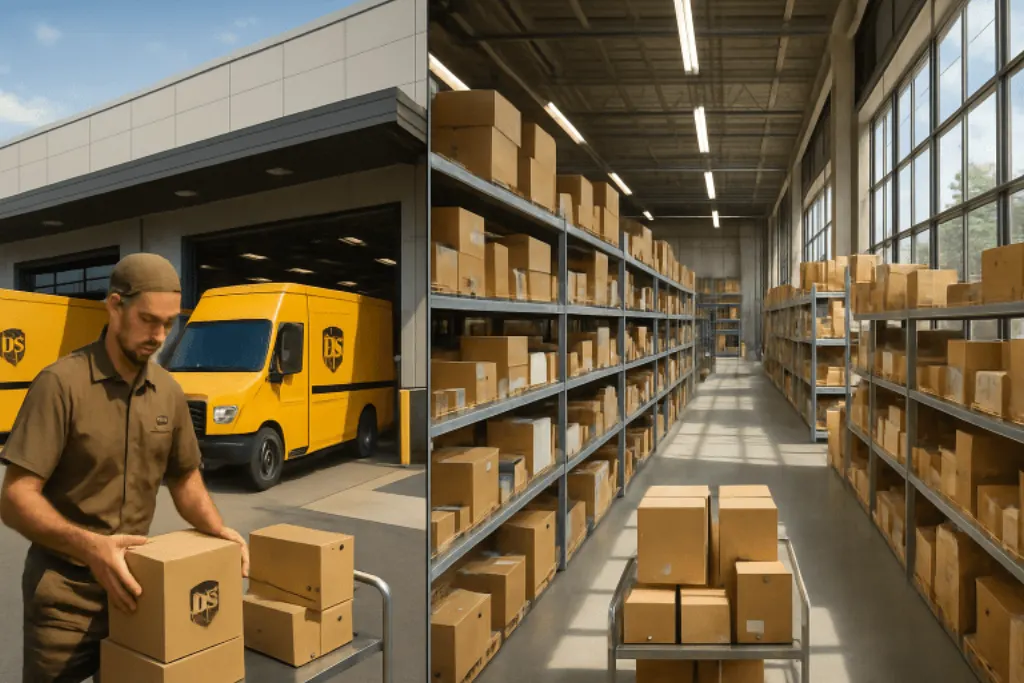
In response to the ever-increasing demands of e-commerce, UPS launched the UPS Ground Saver service in 2025, designed for non-urgent shipments. This option is ideal for brands looking to reduce costs without compromising delivery reliability. Compared to the standard service, UPS Ground Saver offers slightly longer delivery times, but remains a competitive solution in a market where speed is not always the top priority.
This new service is primarily aimed at online retailers and direct-to-consumer companies that want a cost-effective yet reliable service. The integration of tracking features, as well as photo confirmations upon delivery, meets customer expectations for transparency and security. **Discover how UPS is adapting to market changes by launching new delivery options focused on light freight and e-commerce, to meet the growing needs of consumers and businesses.**UPS’s other major innovation is the UPS Ground with Freight Pricing service. This hybrid solution is aimed at shipments exceeding 150 pounds, often classified as less-than-truckload (LTL). By adopting a pricing structure tailored to small packages for these large shipments, UPS offers a simple and cost-effective alternative to cumbersome traditional freight logistics.
With these advancements, UPS seeks to differentiate itself by offering a range of delivery services that combine the advantages of light freight and parcel shipping. Other players such as GLS and Sogexpress are following this development with interest, also keen to optimize their offerings to remain competitive. The success of these new options lies in their ability to exempt shipments from certain common fees associated with traditional freight, such as those associated with liftgates or inside deliveries. By leveraging its parcel network, UPS thus improves the predictability of costs and delivery times.

UPS’s Competitive Advantages in the Market **With the introduction of these services, UPS marks a strategic breakthrough in the shipping market that potentially impacts the practices of rival companies such as Bpost and TSE Express. Indeed, as e-commerce platforms explode, logistics players are looking for innovative ways to improve their offerings, and UPS is no exception.**One of UPS’s key competitive advantages lies in its ability to offer package-level pricing for large shipments. This model stands out considerably given the more rigid traditional requirements of heavy freight.
Furthermore, UPS’s simplified pricing eliminates many of the surcharges often associated with freight shipments. With this strategy, UPS not only offers competitive costs but also allows customers to better financially plan their shipments. This simplification of the pricing process is particularly appealing to companies looking to optimize their supply chain.
Statistics show that the LTL market could reach peaks of nearly $94.5 billion by 2026. With its new offerings, UPS is capturing a valuable share of this growing market. This effectively puts pressure on competitors such as FedEx and Mondial Relay to innovate in return. Service
Price
Delivery Time
UPS Ground Saver
Retailers & Direct-to-Consumer
Less Cherokee
In doing so, UPS expects to improve not only operational efficiency but also customer satisfaction. However, this maneuver could lead to union tensions and logistical adjustments throughout its global network.

The deployment of their services is also a barometer of economic health. With the expected slowdown in economic growth, driven by factors such as reduced consumer spending, companies must therefore adapt to maintain increased profitability (source).
https://www.youtube.com/watch?v=ai66\_-osA2Q[Towards Greener and Sustainable Logistics](/comment-fedex-revolutionne-le-commerce-electronique-entre-la-chine-et-les-etats-unis/)Another central pillar of UPS’s 2025 agenda is sustainability. The company has committed to reducing its carbon footprint with initiatives such as a 100% electric fleet for its deliveries in Paris. As such, it is becoming a model for other players like Colissimo, which is seeking to achieve a similar level of commitment.
These steps toward sustainable logistics are not limited to UPS. Carriers such as GLS and Sogexpress are also pursuing decarbonization strategies that will position them as leaders in a greener logistics future. (
source

Read next
 E-commerce news
E-commerce and AI: Demand keeps putting pressure on air freight outside Asia
The Impact of E-commerce on Air Freight Outside Asia E-commerce has profoundly transformed the global logistics landscap
 E-commerce news
Is air freight demand for cross-border e-commerce under threat?
Cross-border e-commerce has radically transformed the freight transport landscape, particularly the international air fr
 E-commerce news
Qatar Airways Cargo: How the rise of e-commerce is propelling freight growth
In the modern world, the e-commerce market is experiencing rapid expansion, facilitated by cargo transportation giants s
 E-commerce news
BlinkIt and Swiggy: India mandates the end of 10-minute delivery times
BlinkIt and Swiggy: Revolution and Regulation in India’s Ultra-Fast Delivery The race for ultra-fast delivery in India h